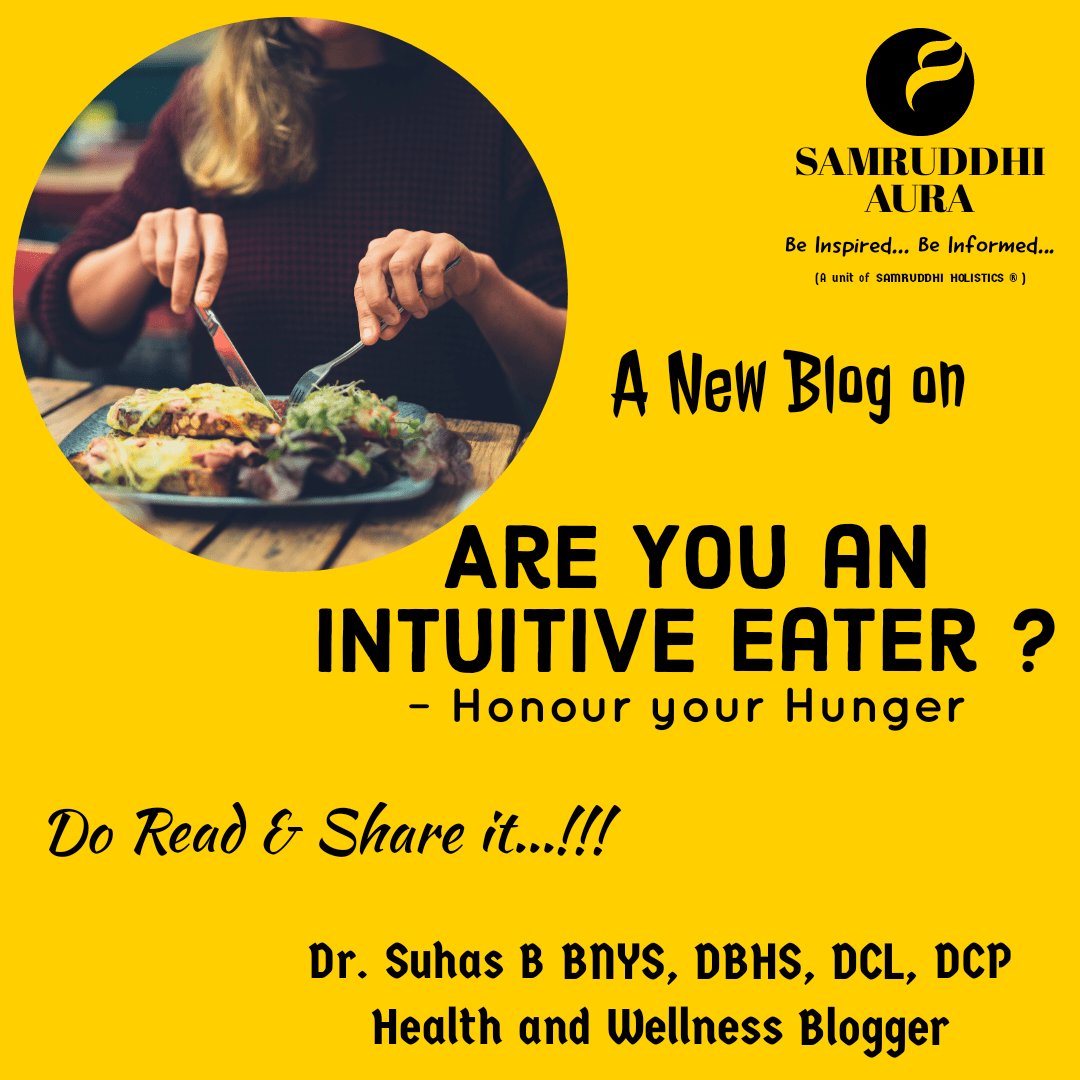
What Kind of Eater Are You?
• Perhaps you are still dieting and don’t know it…!
• There are many eating styles that are actually unconscious forms of dieting.
• Many of our patients have said they were not on a diet—but upon closer inspection of what and how they eat we found they were still dieting.
• Here’s a good example.
• Lohith came in because he wanted to lose about
fifteen kgs.
• He said that in his fifty years of living, he had only been
on four serious diets.
• He stated,
“You work with a lot of serious dieting problems … well I’m not one of those.”
• Lohith clearly did not see himself as a dieter, merely a careful eater.
• Yet it turned out that he was an unconscious dieter.
• Although Lohith was not actively dieting, he was undereating to a level where he was nearly
passing out in the afternoon.
• The reason—he had always been unhappy
with his weight.
• In the mornings he would go for an intense hilly bike
ride for one hour, then come home and eat a small breakfast.
• Lunch was usually salad with iced tea (while this sounds healthy, it’s too low in carbohydrates).
• By suppertime, his body would be screaming for food.
• Lohith was not only in a severe calorie deficit, but also carbohydrate-deprived.
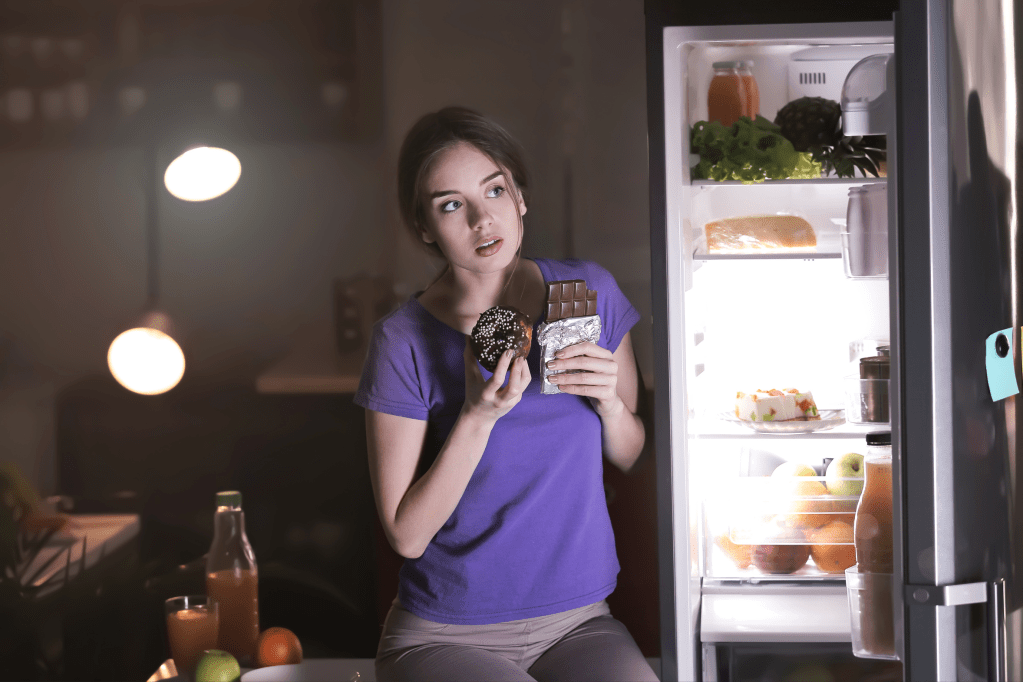
• Evenings turned into a food fest. Lohith had thought he had a “food volume” problem with a strong sweet tooth.
• In reality, he had an unconscious diet mentality that biologically triggered his night eating and
sweet tooth.
• Akhila also was not a conscious dieter. She came in not to lose weight, but because she wanted to increase her energy level.
• During the initial session, it became clear that she had complicated issues with food. So she was asked if she had been dieting a lot. She looked astonished.
• “How did you know that I’ve been on zillions of diets?” While Akhila claimed to be okay with her current weight, she was still at war with food; she didn’t trust herself with food.
• As it turns out, Akhila had been dieting since she was a child.
• Although she was not officially dieting, she retained (and expanded) a set of food rules with each diet that nearly
paralyzed her ability to eat normally.
• We see this all the time, the hangover from dieting: Avoiding certain foods at all costs, feeling out of control the moment a “sinful” food is eaten, feeling guilty when
self-imposed food rules are broken (such as “Thou shall not eat past 6:00 P.M.”), and so on.
• Unconscious dieting usually occurs in the form of meticulous eating habits.
• There can be a fine line between eating for health and dieting.
• Notice how even the frozen diet foods such as Lean Cuisine and Weight Watchers are putting their emphasis on health rather than diet.
• As long as you are engaged in some form of dieting, you won’t be free from food and body worries.
• Whether you are a conscious or an unconscious
dieter, the side effects are similar—the diet backlash effect.
• This is characterized by periods of careful eating, “blowing it,” and paying penance with more dieting or extra-careful eating.
• We will explore the various dieting/eating styles to
help see where you are now.

THE EATING PERSONALITIES
• Later, you will meet the Intuitive Eater and
the Intuitive Eating style, the solution to living without diets.
• To help you clarify your eating (or dieting) style, we have identified the following key categories of eaters that exhibit characteristic eating patterns:
• The Careful Eater, the Professional Dieter, and the Unconscious Eater.
• These eating personalities are exhibited even when you are not officially dieting.
• It’s possible to have more than one eating personality;
although we find that there tends to be a dominant trait.
• Events in your life can also influence or shift your eating personality.
• For example, one client, a tax attorney, was normally a Careful Eater, but during tax season he became the Chaotic Unconscious Eater.

• There’s nothing wrong with possessing the eating characteristics described under the three eating personalities.
• But when your eating exists in one of these domains most of the time, it can be a problem.
• Read through each eating personality and see which one best reflects your eating style.
• By understanding where you are now, it will be easier
to learn how to become an Intuitive Eater.
• For example, you may find you have been engaged in a form of dieting, and not even have been aware of it.
• Or you may discover traits that unknowingly work against
you.

The Careful Eater
• Careful Eaters are those who tend to be vigilant about what foods they put into their bodies.
• Lohith was an example of a Careful Eater (by day).
• On the surface, Careful Eaters appear to be “perfect” eaters.
• They are highly nutrition-conscious. Outwardly, they seem health and fitness-oriented (noble traits admired and reinforced in our society).
• Eating Style. There is a range of food behaviors that the Careful Eater exhibits.
• At one extreme, the Careful Eater may anguish over each
morsel of food allowed into the body.
• Grocery shopping trips are spent scrutinizing food labels.

• Eating out often means interrogating the waiter—what’s in the food, how the food is prepared—and getting assurances that the food is cooked specifically to the Careful Eater’s liking (usually not one speck of oil or other fat used).
• What’s wrong with this? Aren’t label reading and assertive restaurant ordering in the health interest of most people? Of course…!
• The difference, however, is the intensity of the vigilance and the ability to let go of an “eating indiscretion.”
• Careful Eaters tend to undereat and to monitor the quantity of food eaten.
• The Careful Eater can spend most of his or her waking hours planning out the next meal or snack, often worrying about what to eat.
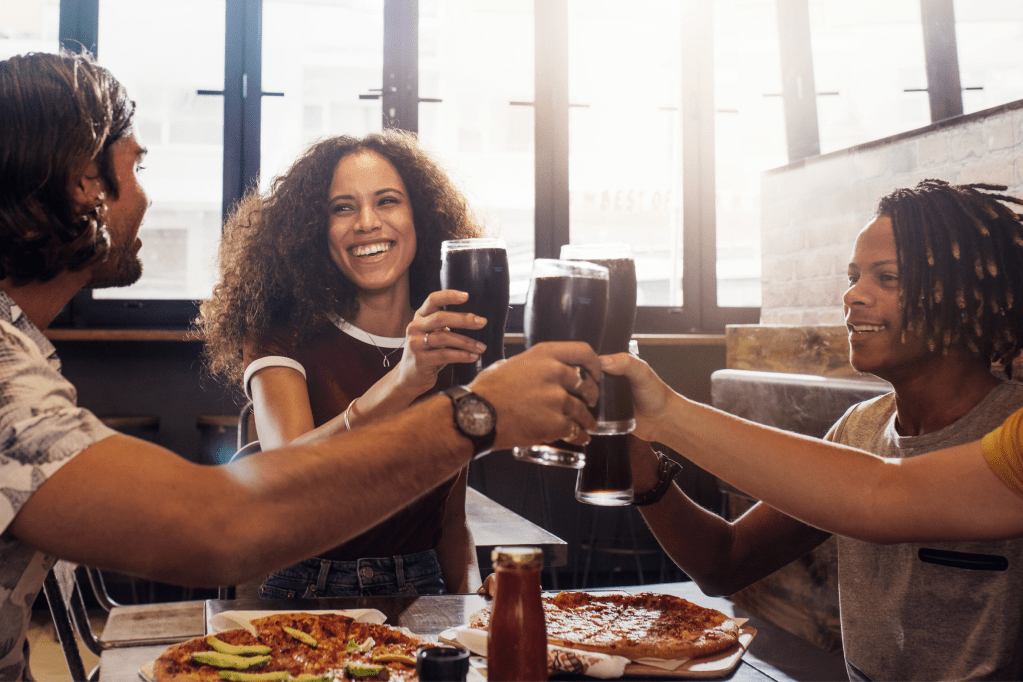
• While the Careful Eater is not officially on a diet, his or her mind is—chastising every “unhealthy” or fatty food eaten.
• The Careful Eater can run the fine line between being genuinely interested in health, and eating carefully for the sake of body image.
• Sometimes the Careful Eater is guided by time or events. For example, some Careful Eaters are meticulous during the weekdays, so that they earn their “eating right” to splurge on the weekends or at an upcoming party.
• But weekends occur 104 days of the year—the splurges can
backfire with unwanted weight gain. Consequently, it’s not unusual for a Careful Eater to contemplate going on a diet.
• The Problem. There’s nothing wrong with being a Careful Eater and interested in the well-being of your body.
• The problem occurs, however, when diligent eating (almost bordering on militant) affects a healthy relationship with food—and negatively impacts your body.
• Careful Eaters, upon closer inspection, resemble a subtle dieting style. They may not diet, but they scrutinize every food situation.

The Professional Dieter
• Professional Dieters are easier to identify; they are perpetually dieting.
• They have usually tried the latest commercial diet, diet book, or new weight-loss gimmick.
• Sometimes dieting takes place in the form of
fasting, or “cutting back.”
• Professional Dieters know a lot about portions of foods, calories, and “dieting tricks,” yet the reason they are
always on another diet is that the original one never worked.
• Today, the Professional Dieter is also well-versed in counting carbohydrate grams.
• Eating Style. Professional Dieters also have careful eating traits.
• The difference, however, is that chronic dieters make every eating choice for the sake of losing weight, not necessarily for health.
• When the dieter is not officially on a diet, he or she is usually thinking about the next diet that can be started.
• She often wakes up hoping this will be a good day—
the new beginning.
• While Professional Dieters have a lot of dieting knowledge, it doesn’t serve them well.
• It’s not unusual for them to binge or engage in Last
Supper eating the moment a forbidden food is eaten. That’s because chronic dieters truly believe they will not eat this food again; for tomorrow they diet, tomorrow they start over with a clean slate.
• Better eat now, it’s the last chance. Not surprisingly, the Professional Dieter gets frustrated at the futility of the vicious cycle.
• Diet, lose weight, gain weight, binge intermittently, and go back to dieting.
• The Problem. It’s hard to live this way. Yo-yo dieting makes it increasingly difficult to lose weight, let alone eat healthfully.
• Chronic undereating usually results in overeating or periodic binges.
• For some Professional Dieters, the frustration of losing weight becomes so intensified that they may try laxatives, diuretics, and diet pills.
• And because these “diet aids” do not work, they may try extreme methods such as chronic restricting, in the form of anorexia nervosa, or purging (throwing up after a binge), in the form of bulimia.
• While anorexia and bulimia are multifactorial and rooted with psychological issues, a growing body of research has demonstrated that chronic dieting is a common stepping-stone into an eating disorder.
• One study in particular found that by the time dieters reach the age of fifteen years, they are eight times as likely to suffer from an eating disorder as non-dieters.

The Unconscious Eater
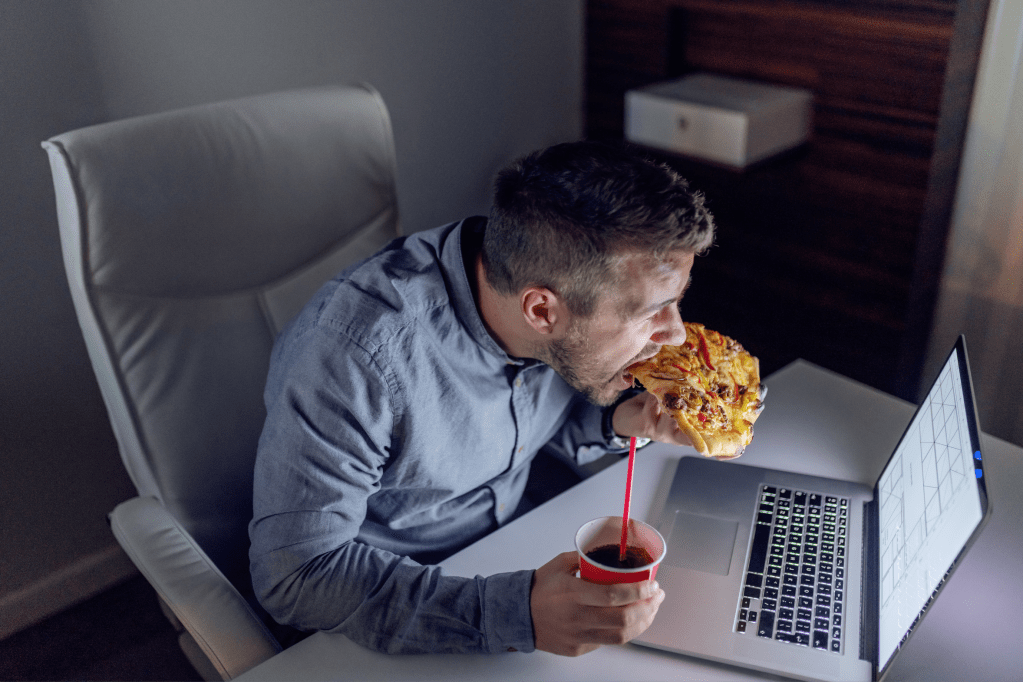
• The Unconscious Eater is often engaged in paired eating—which is eating and doing another activity at the same time, such as watching television and eating, or reading and eating.
• Because of the subtleties, and lack of awareness, it can be difficult to identify this eating personality.
• There are many subtypes of Unconscious Eaters.
• The Chaotic Unconscious Eater often lives an over-scheduled life, too busy, too many things to do.
• The chaotic eating style is haphazard; whatever’s available will be grabbed—vending machine fare, fast food, it’ll
all do.
• Nutrition and diet are often important to this person—just not at the critical moment of the chaos.
• Chaotic Eaters are often so busy putting out fires that they have difficulty identifying biological hunger until
it’s fiercely ravenous.
• Not surprisingly, the Chaotic Eater goes long periods of time without eating.
• The Refuse-Not Unconscious Eater is vulnerable to the mere presence of food, regardless if he or she is hungry or full.
• Candy jars, food lying around at meetings, food sitting on a kitchen counter will not usually be passed up by the Refuse-Not Eater.
• Most of the time, however, Refuse-Not Eaters are not aware that they are eating, or how much they are eating.
• For example, the Refuse-Not Eater may pluck up a couple of
candies on the way to the restroom without being aware of it.
• Social outings that revolve around food such as cocktail parties and holiday buffets are especially tough for the Refuse-Not Eater.

• The Waste-Not Unconscious Eater values the food dollar. His or her eating drive is often influenced by getting as much as you can for the money.
• The Waste-Not Eater is especially inclined to clean the plate
(and others as well).
• It’s not unusual for a Waste-Not Eater to eat the
leftovers from children or spouse.
• The Emotional Unconscious Eater uses food to cope with emotions, especially uncomfortable emotions such as stress, anger, and loneliness.
• While Emotional Eaters view their eating as the problem, it’s often a symptom of a deeper issue.
• Eating behaviors of the Emotional Eater can range from grabbing a candy bar in stressful times to chronic compulsive binges of vast quantities of food.
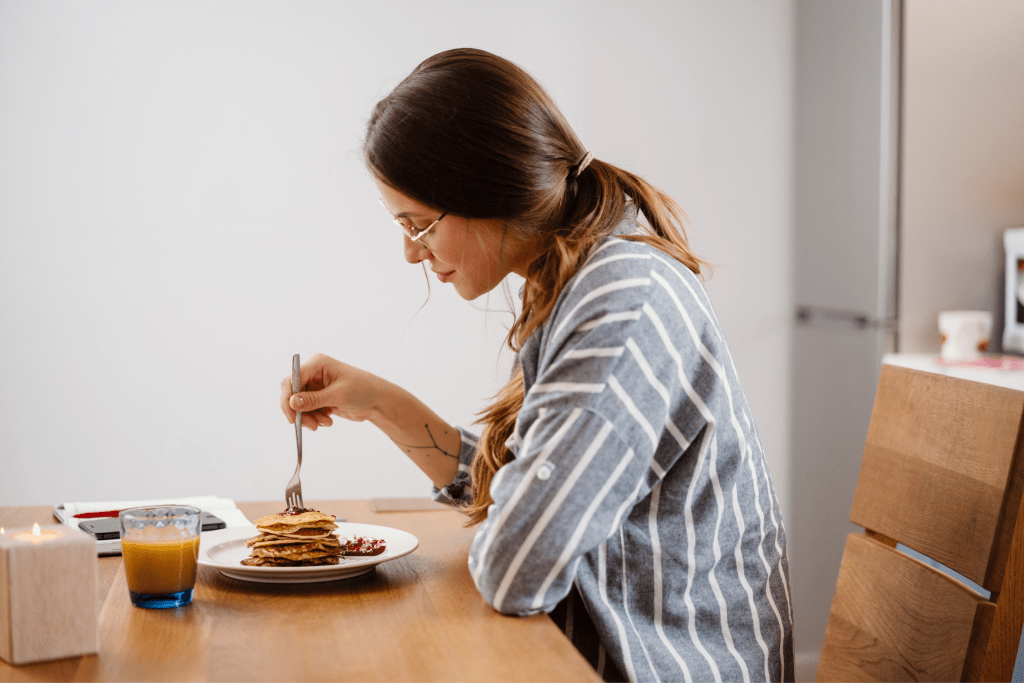
• The Problem. Unconscious eating in its various forms is a problem if it results in chronic overeating (which can easily occur when you are eating and not quite aware of it).
• Keep in mind that somewhere between the first and last bite of food is where the lapse of consciousness takes place. As in, “Oh, it’s all gone!”
• For example, have you ever bought a large box of candy at the movies and begun to eat it only to discover your fingers suddenly scraping the bottom of the empty box? That’s a simple form of unconscious eating.
• But unconscious eating can also exist at an intense level, in a somewhat altered state of eating.
• In this case, the person is not aware of what is being eaten, why he started eating, or even how the food tastes. It’s like
zoning out with food.

“If you don’t love it, don’t eat it, and if you love it, savor it.”
– Evelyn Tribole
Verbalized by-
https://samruddhiholistics.airsite.co/
Dr. Suhas B BNYS, DBHS, DCL, DCP
Health and Wellness Blogger
Sustainable Lifestyle Influencer
Holistic Cuisinier
FOUNDER | DIGITAL CREATOR | BLOGGER |ENTREPRENEUR

 SAMRUDDHI AURA